|

|

|
Muller's Lane Farm
|
| |
|
||||
|
|||||
| Making Cold Process Bar Soap From Scratch | |||||
|
It's not a big mystery, just simple chemistry. Soap is simply the result of combining a caustic agent (lye) using a liquid carrier (such as water, milk, tea) with fats and oils. All recipes are listed by Weight and not volume. An accurate scale is a must in soap making.
| |||||
| Basic Supplies | |||||
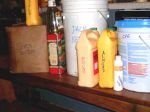 | 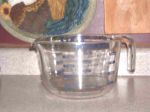
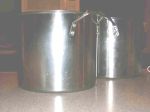  Oils, lye, stainless steel pot, bowls to measure oils, bowl to measure lye, bowl to measure liquid, stick blender, recipe, rubber gloves, eye goggles, apron.
| ||||
| Fats and Oils: | |||||
 |
Any types of fats and oils can be used to make soap, different oils and fats will lend different characteristics to your final soap. Each fat has a saponification (SAP) value. Simply put, each fat needs a different amount of lye to convert the fat into soap. There are a number of SAP & fatty acid tables available on the web as well as lye calculators. If you are using solid fats such as palm oil, coconut oil, lard, tallow or others, be sure to melt these before adding the lye solution. Shown is Lard and Palm Kernel oil.
| ||||
| Liquid Carrier: |  |
You can use water, milks, herbal teas, or hydrosols. The purpose of the liquid is to disperse the lye throughout the oils and fats. Your liquid should be between 25%-38% of your total fats and oils by weight. I suggest you use the higher end of the scale (38%) until you are familiar with how your particular soap recipe acts. If you are using milk, teas or hydrosols, I recommend you freeze it for better results. Adding lye to thawed milk can result in it burning. The milk turning a bright yellow or orange is a good indication of burnt milk. This does not make the soap unusable, but it will be dark in color. To the left is cream and aloe vera juice blended with aloe vera leaves frozen in zipper-type bags.
|
|||
|
Lye:This is the caustic agent used in making soap. NaOH or Sodium Hydroxide is sold under various commercial names in the plumbing department of hardware and big box stores. | ||||
| |
Lye is a very strong base and it is very dangerous when improperly used. Take precaution when using lye. Using eye protection and rubber gloves is recommended. If you get a little on your skin, you should dilute it by flushing the area with copious amount of water. Do NOT use vinegar, as this will cause a chemical burn! Better yet, protect yourself! Lye can reacts to some metals, Never use aluminum!. Only use stainless steel (pictured to the left), non-chipped enamel, glass, or heavy plastic containers. | ||||
 |
Dissolve your lye in cold liquid in a large container. Always pour your lye into the liquid and not the other way around. You will want the temperature of your lye solution to be between 75*-130* F before mixing with your fats and oils. Make sure your lye is thoroughly dissolved. Un-dissolved pieces of lye will end up in your soap and burn your skin. The picture to the left shows lye being incorporated with frozen cream and frozen Jersey cow's milk.
| ||||
 | To the left is frozen cream and frozen Aloe Vera juice being used with lye. For my milk soaps, I dump the lye in 3 equal portions, stirring well between 'dumps' and using the stick blender after the final 'dump' to break up the remaining frozen milk and fully incorporation the lye. Pour immediately into the waiting oils so the milk/lye solution does not heat up!
If your recipe does not state a temperature a temperature of 95* to 125* F is fine for your oils.
| ||||
| Combining & Saponification | |||||
| Your fats and oils should be about the same temperature as your lye solution, unless you are making a milk soap. The more solid oils you use, the higher temperature you will need. Saponification is the term used for the chemical reaction that takes place between the lye solution and your fats. It starts to take place when you first combine the two and ends between 12-96 hours later depending if you encourage the exothermic (heat producing) reaction by insulating your soap or retard it by placing it in a cold environment.
| |||||
|
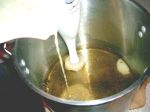
Slowly pour your lye solution into your fats and oils in a steady stream with continuous stirring. You should start to see the mixture get grainy as the oils react to the lye solution. Keep stirring. Your goal is to achieve trace. Shown is the cream and lye based solution being poured into your oils. I should be mixing as I pour but I ran out of hands! | ||||
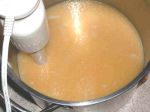 |
I separate trace into 3 stages. Light trace is when your soon to be soap starts to emulsify and thicken up. You can see trails left from your spoon or stick blender. These trails will quickly disappear. Medium trace is when the soap mixture is thick enough you can dribble soap onto the surface of the soap and it stays on top before disappearing. Heavy trace is when your soap mixture becomes very thick! (You can also experience something called a seize when you add a fragrance oil that accelerates trace. This is different from a heavy trace, as it looks more like mashed potatoes!) | ||||
| |
Stirring by hand can take hours, I highly recommend using a stick blender (pictured) commonly used for mixing drinks. Use your stick blender off and on with hand stirring other wise you can burn out the motor in your stick blender. | ||||
 | |||||
| Additives: | |||||
| When your soap has reached 'trace' it is time to add your goodies, if you so desire. Your goodies could be extra oil for emollient purposes, scents, colors or botanicals. When scenting your soap, be sure to use only fragrances approved for use on skin. Potpourri is not suitable! Listed at the bottom are some web sites that sell fragrance oils and essential oils for soap making. | |||||
| Mold: | |||||
 |
Almost anything that will hold your soap mixture is a candidate for a soap mold! From a garbage bag lined shoe box to a Pringles can all the way to intricate Milky Way Molds. As long as the mold is not aluminum and the opening is not smaller than the bottom, it is a possible soap mold. Pour your soap into your molds, cover with plastic wrap, wax paper, cardboard or something similar. Wrap with blankets or towels to insulate or place in refrigerator to retard saponification. | ||||
| Unmolding & Curing: | |||||
 |
Your soap will be ready for un-molding and cutting in 8-72 hours. It really depends on the oils you use. If you soap does not release from the mold easily, give it another 12 hours. Cut your soap when it is unmolded and set it on a rack for 3 - 6 weeks to cure. (**Note: The difference in cure time can be traced back to the amount of liquid used in your lye solution. Don't be mistaken that soap made with hot process doesn't need to be cured! Hot process only speeds the saponification.) This cure time is needed for the water to evaporate out of the bar, making it harder and longer lasting. Fragrances that seem to disappear during the saponification process may again reappear. Lather is greater the longer the soap dries. | ||||
| Miscellaneous Ramblings: | |||||
If your soap did not turn out, do not throw it away! Every batch of soap can be reclaimed in some way. Please email if you need help! | |||||

| Links to get you started
Top |
||
| Fatty Acid Tables: | SAP Tables | |
| Kathy Miller's Oil Properties | Kathy Miller's soap pages (*You will need Adobe Reader to access this)
|
|
| Lye Calculators: |
Natural Colorants: |
|
|
===> SOAP CALC <=== My personal favorite! MMS - Majestic Mountain Sage From Nature With Love |
Muller's Lane Farm | |
| Essential & Fragrance Oil suppliers: | Fragrance & Essential Oil suppliers: | |
| Majestic Mountain Sage (aka MMS) New Directions Aromatics Bulk Apothecary Sweetcakes
|
Mountain Rose Herbs Appalachian Valley Natural Products BrambleBerry |
|
| General Soaping Supplies: | Good Soaping Links! | |
|
Soapers Choice ~ aka Columbus Foods - Majestic Mountain Sage From Nature With Love Wholesale Supplies Plus
|
TeachSoap.com Facebook Tallow Soapers! Kelsie Molds (the ones I use!)
|
|
|
|
| How to hand calculate a soap recipe:
Top
|
|
To hand calculate Lye & water amounts based on oils used:
Please email me if you have any questions about soap making or are in need of supplies! |
|
|
| Sorry these are not the recipes I am currently using in my line of soaps! Top
| ||||||||||||||||||||||||||||||||||||||||||